
Why the Sultans Left Topkapı for Dolmabahçe Palace
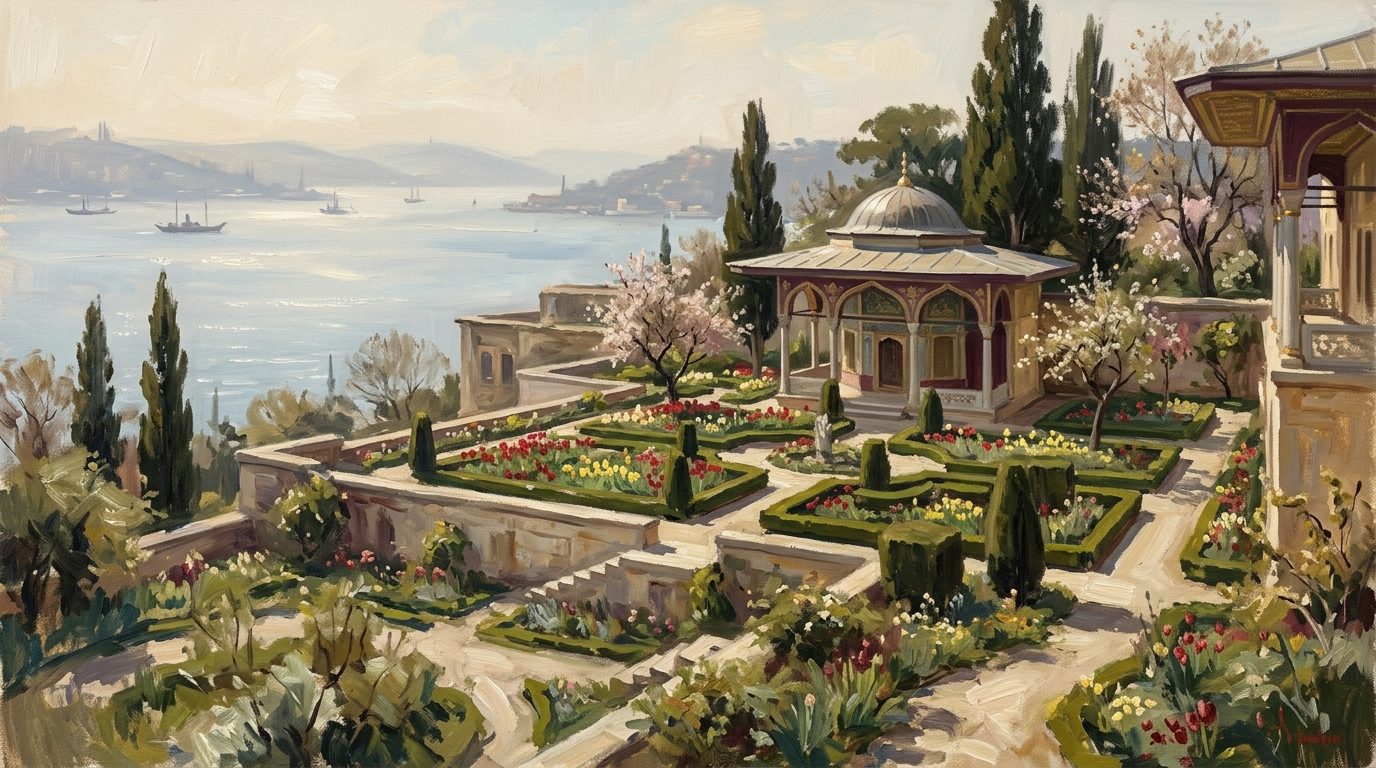
The Ottoman sultans left Topkapı Palace in 1856, when Sultan Abdülmecid I moved his court to the new Dolmabahçe Palace on the shore of the Bosphorus. After almost four hundred years, the medieval warren of courtyards and wooden pavilions was abandoned as a royal residence in favour of a vast European-style palace of marble, crystal and gaslight. The move was less about comfort than about image: a modernising empire wanted a modern face.
It is one of the great turning points in the palace’s story — the day the sultans walked away from the seat of Mehmed the Conqueror. The reasons run deeper than a change of address.
An Empire Remaking Itself
By the mid-nineteenth century the Ottoman Empire was in the midst of the Tanzimat, a sweeping programme of reform meant to modernise the state along European lines — new laws, a new army, new bureaucracy, new schools. An empire reinventing its institutions wanted a residence to match.
Topkapı, for all its history, spoke the wrong language. Its architecture of secluded courtyards, hidden grilles and screened Harem embodied an older idea of a sultan who ruled through distance and mystery, the world described in our account of a day in the life of an Ottoman sultan. The reforming sultans wanted instead to appear as recognisable European-style monarchs who received ambassadors in grand halls and hosted state balls. A palace of courtyards could not stage that.
The Pull of Dolmabahçe
The alternative rose along the water. Built between 1843 and 1856 for Abdülmecid I by the Armenian court architects of the Balyan family — Garabet Balyan and his son Nikoğos — Dolmabahçe Palace was a lavish fusion of Baroque, Rococo and Neoclassical styles stretched along the European shore of the Bosphorus.
Everything about it announced the new age. It had a grand ceremonial staircase with crystal balusters, one of the largest chandeliers in the world hanging in its throne room, European furniture, oil paintings, and modern conveniences unknown at Topkapı, including gas lighting and, in time, running water. Where Topkapı turned inward around private courts, Dolmabahçe opened outward to the sea in a single monumental façade, built to be seen and photographed. For a dynasty courting European recognition, it was the obvious stage.
What Topkapı Kept
Yet the old palace was never simply shut up. Even after the court left, Topkapı retained a sacred and ceremonial role that no new building could inherit. It remained the home of the holy relics of Islam — the Mantle of the Prophet and the other trusts brought to Istanbul in the sixteenth century — and the site of the annual ceremonies that venerated them.
It also held the Imperial Treasury, the accumulated splendour of the dynasty, and the tombs and memory of the state. Some members of the extended royal household, pensioners and staff continued to live within its walls. Topkapı slipped from residence to reliquary: no longer where the empire was run, but still where its deepest continuity was kept.
After the Move
Dolmabahçe did not have the last word either. Later sultans built and favoured other palaces along the Bosphorus, and Abdülhamid II retreated to the hilltop seclusion of Yıldız Palace, distrusting Dolmabahçe’s exposed shoreline. The imperial court became a moving thing, no longer anchored to a single ancient seat.
The Ottoman story closed within living memory of the move. The sultanate was abolished in 1922 and the Republic proclaimed in 1923. A year later, in 1924, Topkapı was opened to the public as a museum — one of the first of the new state — turning the forbidden inner courts into rooms that anyone could walk. More such turning points appear in our roundup of surprising Topkapı facts.
Walking the Palace They Left
To visit Topkapı today is to visit a palace at the moment history paused it: preserved not as a living court but as the memory of one, its residence chapters closed in 1856 and its doors opened to the world in 1924. Knowing why the sultans left, and what they carried with them to the Bosphorus, changes how its silent courtyards read.
To explore that history where it happened, with an expert guide to connect Topkapı’s decline to the wider Ottoman story, you can arrange a guided visit here.