
A Day in the Life of an Ottoman Sultan at Topkapı
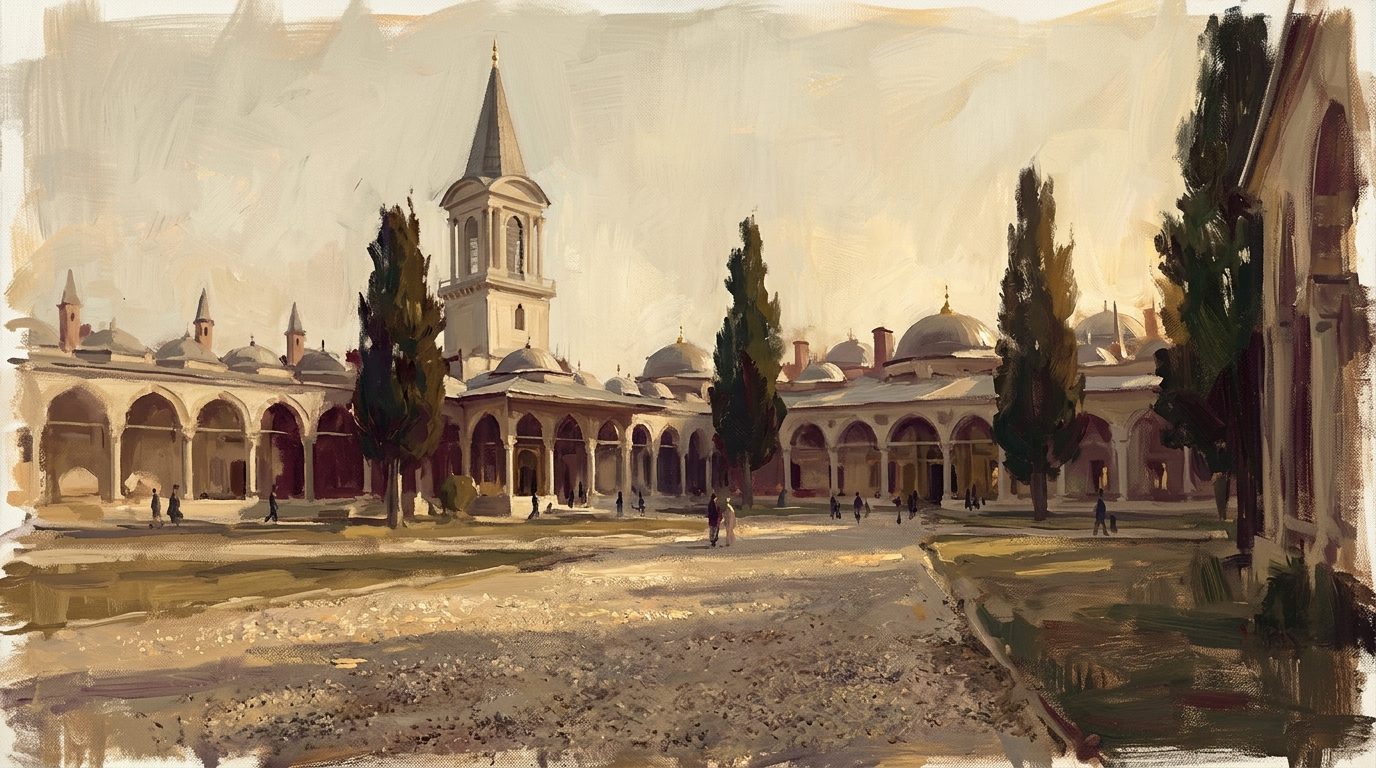
A day in the life of an Ottoman sultan at Topkapı ran on a script older than any single ruler: dawn prayer in the Privy Chamber, council business overheard through a golden grille, food tasted for poison and eaten alone, and an evening in the Harem. All of it unfolded inside a court where silence was the mark of majesty.
Dawn: The Quiet of the Privy Chamber
The sultan’s day began before sunrise, with the call to prayer drifting over the Third Court. He woke in the innermost palace, near the Privy Chamber, the Has Oda, served by a small corps of hand-picked pages who managed everything from his wardrobe to his water. After ablutions came the dawn prayer, performed privately.
This was the stillest hour Topkapı knew. The pages moved without speaking, the braziers were relit, and the ruler of three continents stood barefoot on carpet like any other worshipper. Whatever the day demanded, it started here, in near silence.
The Ritual of Dressing
Dressing an emperor was a ceremony in itself. The wardrobe officers brought silk and cloth-of-gold kaftans, many worn only briefly before being labelled and stored, which is why hundreds survive today. The turban received its jewelled aigrette, the sorguç, a spray of gems and heron feathers that served as the visible shorthand of sovereignty. Many of these kaftans and aigrettes now rest in the Treasury, and they still carry the scale of the man and the office.
Every item was logged. In this palace, even getting dressed produced paperwork.
Morning: The Council He Never Sat In
On council days the Imperial Divan gathered under the domes beside the Tower of Justice: viziers, treasurers and judges working through petitions, appointments and war. Since Mehmed II, the sultan no longer presided in person. Instead, a gilded grille was set high in the council chamber’s wall, reached from the tower behind, and known as “the eye of the sultan”.
Was he behind it that morning? The viziers could never be sure, and that uncertainty was the whole design. A grand vizier who assumed the sultan was absent might say something fatal. The tower and its grille remain one of the sharpest pieces of political architecture in the palace.
Audiences, Ambassadors and Soup
After council, the grand vizier reported to the sultan in the Arz Odası, the Chamber of Petitions just inside the Gate of Felicity. Foreign ambassadors were received here too, in a choreography that left nothing to chance: robes of honour, rehearsed bows, and an escort of officers who gripped each envoy firmly by both arms as he approached the throne. Tradition traces that grip to the assassination of Murad I in 1389, though it is tradition rather than proven origin.
On pay days the Second Court filled with janissaries, served pilav and soup from vast cauldrons. Eating was loyalty made visible. Refusing the food, or overturning the cauldrons, meant the day was about to go very badly.
A Meal Tasted, Then Eaten Alone
By law codes going back to Mehmed II, the sultan dined alone. No companion shared his tray, by custom rather than unsociability; eating with him was an honour too great to grant routinely. His food came not from the enormous imperial kitchens that fed thousands daily, but from the kuşhane, a small private kitchen cooking for one.
Every dish passed the çeşnigir, the taster, before it reached him. Much of his tableware was celadon, prized because it was believed to change colour on contact with poison, a belief, not a chemistry. He ate seated at a low tray, with spoon and fingers, quickly and quietly.
Afternoon: The School, the Bow and the Gardens
Afternoons had room to breathe. The sultan might look in on the Enderun, the palace school in the Third Court that turned select boys into governors and grand viziers. He practised archery and riding; a strong bow arm remained part of the job description long after campaigns ended. Each sultan also learned a craft, and Süleyman famously trained as a goldsmith.
Then there were the outer gardens and shore pavilions, terraces of tulips and plane trees stepping down towards the water, where the day’s formality loosened slightly.
Friday: The Empire’s One Glimpse
Once a week, the walls opened. The Friday procession to the mosque, the selamlık, was the public’s single regular sight of their ruler: cavalry, plumes, and the sultan on horseback. Crowds read everything from it. Did he sit straight? Did he look pale? Petitioners held papers aloft along the route, and officers collected them, one of the few direct channels between subject and sovereign.
Evening: The Harem and the Valide’s Word
Evenings belonged to the Harem, which was less a fantasy than a family headquarters. Here the sultan was son, husband and father: music, poetry, coffee and conversation, under the watchful management of the valide sultan, his mother, often the most influential adviser he had. Many decisions announced in the morning had been argued out here the night before.
Night, Silence and Speaking Hands
Topkapı’s most famous rule was quiet. Raised voices near the sultan were unthinkable, so the court developed a sign language, used and taught by its deaf servants, the dilsiz, letting orders pass through the inner palace without a sound. European visitors recorded their astonishment at corridors of men conversing entirely by hand.
That silence deepened over time. The early sultans described here were campaigners half the year; from the early seventeenth century, princes were confined to the kafes, the “cage” apartments of the Harem, and sultans became palace-bound. The daily script hardened into pure ceremony.
The Day the Calendar Made Sacred
One date broke the routine every year. In mid-Ramadan the sultan led his household to the Chamber of the Sacred Relics beside the Privy Chamber, to venerate the Mantle of the Prophet in a ceremony of rosewater and recitation. For one day, the most private palace in the world turned wholly towards the sacred.
To walk this day yourself, from the council grille to the kitchens and the quiet Third Court, take a guided visit with someone who knows where each hour of the sultan’s routine actually happened.