
The Imperial Treasury: The Spoonmaker's Diamond & the Topkapı Dagger
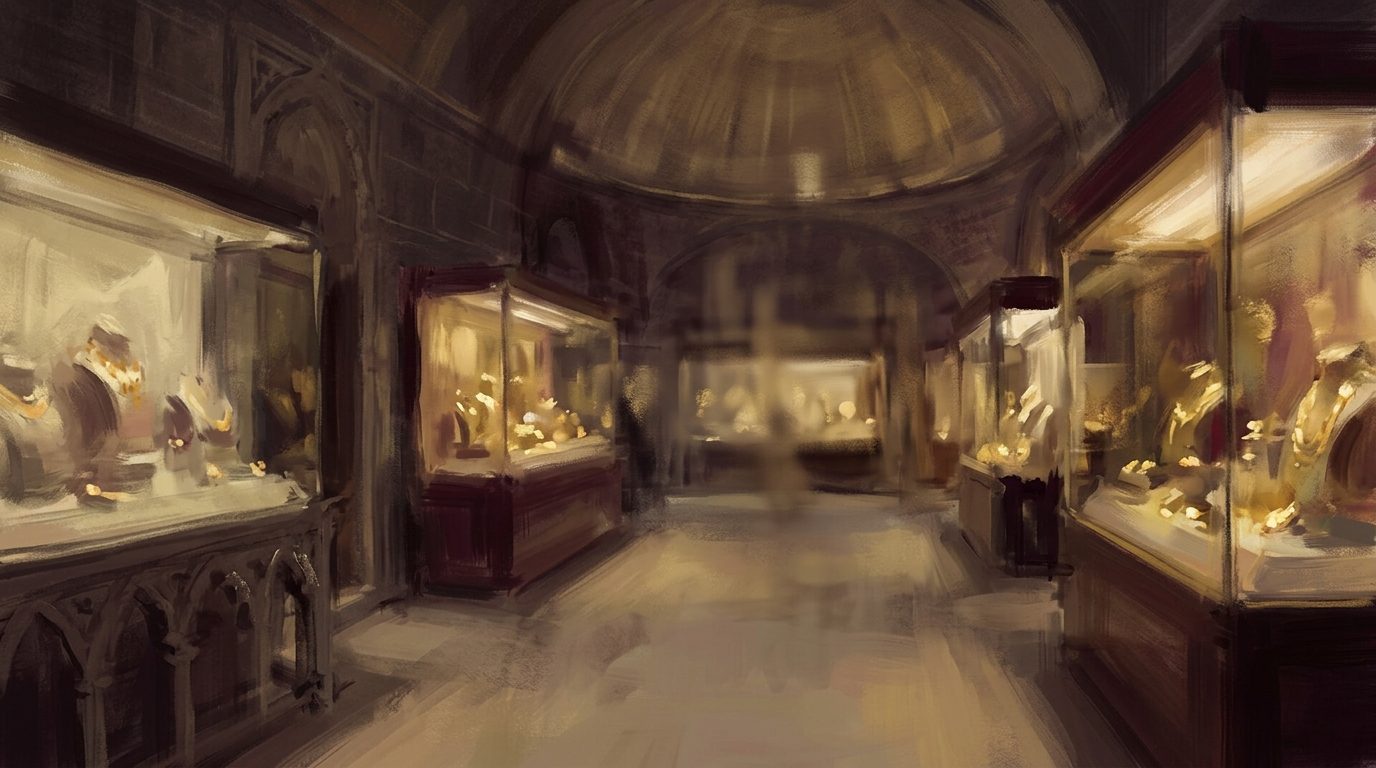
The Imperial Treasury at Topkapı holds two of the most famous objects in the Islamic world: the Spoonmaker’s Diamond, an 86-carat teardrop stone ringed with brilliants, and the Topkapı Dagger, its hilt set with three enormous emeralds. Both sit among golden thrones, jewelled arms and relics of empire in the sultans’ private treasury in the Third Court — a concentration of splendour assembled across four centuries of Ottoman rule.
Few rooms on earth pack so much legend into so little space. Here are the stories behind the treasures that draw the longest queues.
The Spoonmaker’s Diamond
The star of the Treasury is the Kaşıkçı Elması, the Spoonmaker’s Diamond: a pear-shaped, 86-carat stone encircled by a double row of 49 smaller diamonds. It is among the largest cut diamonds in the world, and in the hush of the treasury it seems to gather every scrap of light in the room.
Its name comes from a legend that should be enjoyed as legend. In the best-loved version, a fisherman found a glassy pebble in a rubbish heap at Eğrikapı and, not knowing its worth, traded it to a spoonmaker for three wooden spoons. Other tales tie it to a French officer or to a grand vizier’s purchase. The documented history is thinner than the folklore, but the stone’s brilliance needs no embroidery.
The Topkapı Dagger
If the diamond is the treasury’s beauty, the Topkapı Dagger is its drama. Made in the palace workshops around 1747, its gold hilt is crowned with three large cabochon emeralds, with a fourth emerald concealing a small watch at the pommel. The sheath glitters with more emeralds and enamel.
Its story is one of a gift that never arrived. Sultan Mahmud I had the dagger made as a diplomatic present for Nadir Shah of Persia. Before the Ottoman envoys reached him, Nadir Shah was assassinated in 1747, and the lavish gift turned back for Istanbul, where it entered the imperial treasury instead. Two centuries later the 1964 heist film Topkapi, based on Eric Ambler’s novel, built its plot around stealing the dagger and made it a global celebrity. Our roundup of surprising Topkapı facts gathers more such tales.
Thrones of Gold and Emerald
The treasury is not only jewels. It holds several imperial thrones, each a statement of sovereignty in precious metal. The ceremonial Bayram throne, used for festival audiences, is a golden seat encrusted with hundreds of gemstones and still displayed near the Gate of Felicity on high occasions in the past.
Another, often linked to Sultan Ahmed I, is inlaid with mother-of-pearl and tortoiseshell; a third, the so-called emerald or Nadir Shah throne, is a gilded, cushioned platform heavy with green and red stones. Together they show how the Ottomans used raw material — gold, emerald, pearl — as a language of power, meant to overwhelm an ambassador at first sight.
Why Was the Treasury Here?
The Imperial Treasury occupied a pavilion in the Third Court, the sultan’s private domain, close to the throne room and the Chamber of the Sacred Relics. This was no bank vault for coin — the running treasury of the state sat elsewhere, in the Second Court by the Council. This inner treasury held the dynasty’s accumulated wonders: gifts, spoils, heirlooms and the personal splendour of the sultans.
Its contents were logged, sealed and guarded by the white eunuchs and pages of the inner service. Objects entered and rarely left; an Ottoman jewel might be reset or remade, but the collection as a whole only grew. That is why the treasury today reads like a compressed history of four hundred years of taste and conquest.
Seeing the Treasures Today
The treasury rooms have been restored and rearranged over the years, and the display of individual pieces can change, so it is worth checking what is on show when you plan your route through the palace. Photography rules inside are strict, and the crowds around the diamond can be dense at peak hours.
These objects give up their stories best with someone to tell them — the difference between the spoons legend and the documented record, the diplomatic disaster behind the dagger, the meaning of each throne. To stand before the Spoonmaker’s Diamond and the Topkapı Dagger with an expert guide unfolding their histories, you can arrange a guided visit here.