
The Black Eunuchs of the Ottoman Court at Topkapı
The black eunuchs were the guardians of the Topkapı Harem — enslaved African men, castrated before entering imperial service, who controlled every threshold of the sultan’s private household. Their commander, the Chief Black Eunuch, or Kızlar Ağası, rose from doorkeeper to one of the three or four most powerful figures in the entire empire, ranking alongside the grand vizier and the chief religious authority. Their power came from a single asset: unmatched access to the sultan and his family.
Few figures at Topkapı are more misunderstood. Stripped of the caricature, their story is one of proximity turned into political muscle.
Two Corps, Two Worlds
The Ottoman palace ran on two separate bodies of eunuchs, divided by where they served. The white eunuchs, the Akağalar, guarded the Third Court and the palace school, the male inner service where pages were trained for government. Their chief, the Kapı Ağası, once headed the whole inner palace.
The black eunuchs guarded the other sealed world: the Harem, the domestic household of the sultan’s mother, wives, concubines and children. Recruited largely from north-east Africa and passed through the slave markets, they were the only adult men, besides the sultan, permitted to move freely in that women’s domain. Over the late sixteenth century, as the Harem itself moved to the centre of power, the black eunuchs eclipsed their white counterparts in influence.
The Rise of the Chief Black Eunuch
The turning point came under Sultan Murad III. In 1574 the office of Dârüssaâde Ağası — “Agha of the House of Felicity”, commonly the Chief Black Eunuch — was formally established, and its holder was handed a prize that transformed the post: control of the imperial pious foundations, the vast charitable endowments, or evkaf, of Mecca and Medina.
At a stroke, the Chief Black Eunuch became the administrator of enormous revenues and the patron of countless appointments. He supervised the two holiest cities’ endowments, oversaw the education of princes, controlled who reached the sultan, and in protocol ranked among the very highest officers of state. Men such as Habeşi Mehmed Agha built this office into a power base that could make and unmake grand viziers.
Why Proximity Was Power
At a court where access to the sovereign was rationed like treasure, the eunuchs held the keys — literally. They carried messages between the sultan and the outside government, escorted the women of the household, and stood at every door of the inner palace. A vizier, however grand, often needed the Chief Black Eunuch’s goodwill simply to have his petition placed before the throne.
This is the logic behind the whole system. The Ottomans, like several earlier empires, used eunuchs precisely because they could be trusted in the intimate spaces of the dynasty and, unable to found dynasties of their own, were thought to have no rival loyalty. In practice they became a durable interest group at the heart of the palace, deeply entangled with the women of the Harem — the world explored in our piece on Hürrem Sultan and the women who ran the Harem.
Where They Lived
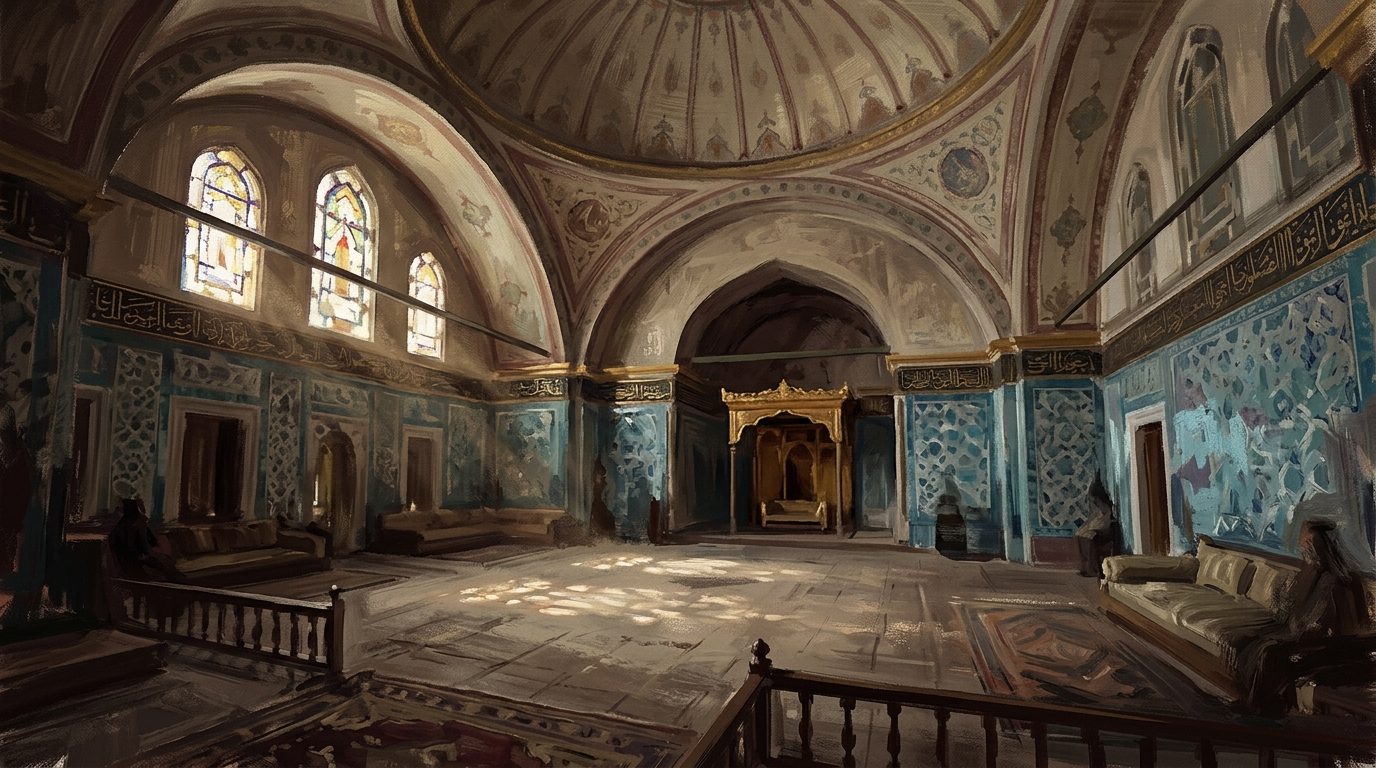
The black eunuchs had their own quarter at the entrance to the Harem: the Court of the Black Eunuchs, a narrow colonnaded courtyard lined with their dormitories, a small mosque, a school and the apartments of their chief. Its walls carry some of the finest tilework in the palace, and it forms the threshold every visitor crosses on the way into the Harem today.
Placed exactly here, at the gateway between the outer palace and the women’s household, the quarter maps their role in stone: they were the living gate. Guests, gifts and messages all passed through them.
Understanding Them Today
It is easy to reduce the eunuchs to an exotic footnote, but they were administrators, financiers and power-brokers who helped hold a sprawling empire together from the palace’s most private rooms. Their court is one of the most atmospheric stops inside the Harem, and its meaning only opens up when the history is told alongside the tiles.
To walk the Court of the Black Eunuchs and the wider Harem with an expert guide who can explain how these men shaped an empire, you can arrange a guided visit here.